What young subscription apps charge: weekly, monthly and yearly prices from 70 earning iPhone apps
Pricing advice usually comes from big apps or surveys. These are the prices of young apps that launched in the last two years and already earn: what they charge per week, month and year, and which combinations they use.
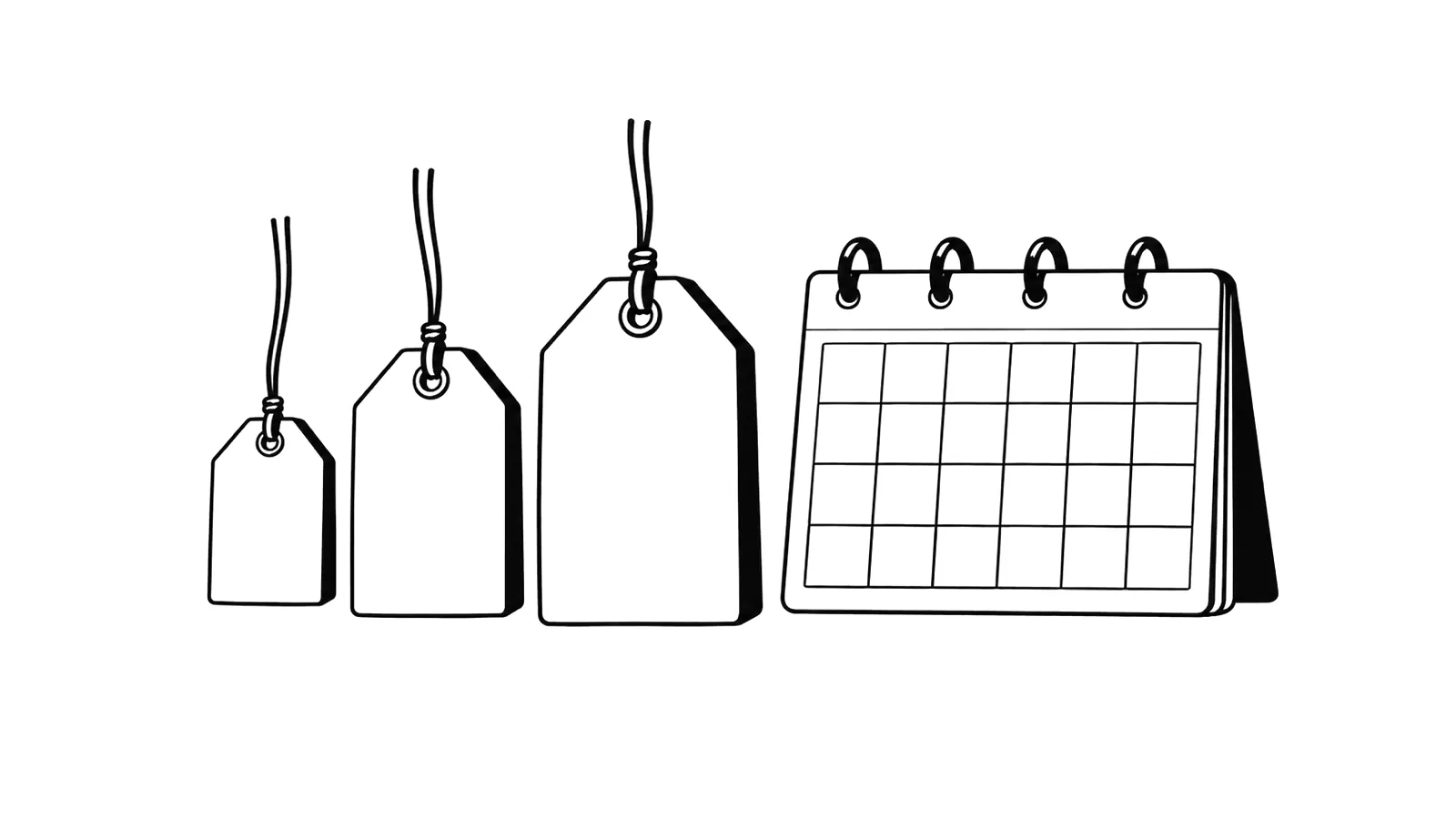
How much should an iOS app charge? Big-app benchmarks don't help much when you're launching alone, and survey data mixes games, utilities and enterprise apps. So we looked at a narrower, more useful group: apps under two years old that already earn enough to appear on the US Top Grossing charts, and read the subscription prices on their App Store pages.
The data
On October 27, 2026, Fledly tracked 926 young earning apps across six countries. For 82 of them (all in the US) we had the in-app purchase list from the App Store product page, and 70 of those sell subscriptions. For 58 the purchase names state the period (weekly, monthly, yearly), so those 58 are the basis for the plan analysis below.
Two caveats before the numbers:
- An App Store page lists an app's in-app purchases, which can include introductory offers and price tests. We use the cheapest listed price per period for each app, which is often the price new users actually see first.
- These are apps that earn, not a random sample. That's the point, but it means the prices are those that work for apps with a working funnel.
Typical prices
| Period | Apps offering it | Median | Middle half | Most common price |
|---|---|---|---|---|
| Weekly | 35 | $7.99 | $6.99–9.99 | $6.99 (10 apps), $9.99 (8) |
| Monthly | 31 | $9.99 | $9.99–17.99 | $9.99 (10 apps) |
| Yearly | 47 | $39.99 | $34.99–71 | $39.99 (15 apps), $29.99 (6) |
The price points cluster tightly. $9.99 a month and $39.99 a year are the default answers; a third of the yearly plans are exactly $39.99. Higher prices exist (up to $349 a year, and $199.99 for several streaming apps), but they are the exception among young apps.
Counting every listed price point instead of the cheapest per app gives slightly higher medians: $9.99 a week, $12.99 a month and $49.99 a year. The difference comes mostly from intro offers listed alongside the regular price.
Which plans they offer
Three patterns cover almost everything:
- Monthly + yearly (19 apps). The classic setup. Common in Food & Drink, Health & Fitness, finance and productivity apps: meal planners, workout trackers, benefits finders. Typically $9.99 a month and $29.99–59.99 a year.
- Weekly + yearly (17 apps). The paywall shows a weekly price as the low entry point and a yearly plan as the "best value". Typical of AI photo and video apps, scanners and camera-based health apps, and a setup often paired with paid-ad funnels.
- Weekly only (8 apps). Six of them are short-drama streaming apps that sell episode access by the week, from $4.99 to $49.99.
Nine apps offer all three periods.
The yearly discount
For the 28 apps that sell both monthly and yearly plans, the yearly price is a median 58% below twelve times the monthly price. Put differently, a year costs about five months of the monthly plan. The range is wide: from 11% (a yearly plan that's barely cheaper) to over 90% (a yearly price that is really an anchor to make the monthly plan look expensive, or the other way round).
A steep yearly discount does two things: it moves people to the plan with the lowest churn, and it makes the monthly price feel like a penalty. Both help revenue, as long as the yearly price still looks reasonable on its own.
Weekly pricing: when it fits and when it backfires
A weekly plan at $7.99 looks small on a paywall but adds up to about $35 a month or $415 a year. Apps use it because it converts well from paid ads: the first charge is low, and the app recoups its ad cost within weeks.
The reviews show where it backfires. In our teardown of budget meal planner apps, "$10 a week" was one of the most repeated complaints, because the audience is people trying to save money. In AI photo-to-video apps, weekly plans combined with coin packs drive most one-star reviews.
A simple rule: if your users find you through search and stay for months, monthly and yearly fit better. Weekly suits short, intense use (a trip, an exam, a creative trend) and paid-traffic funnels.
What this means for your app
- Start with $9.99 a month and $39.99 a year (or $29.99 if your category is price-sensitive). It's what earning young apps converge on, and users have seen those prices many times.
- Make yearly the highlighted plan and price it at roughly four to six months of the monthly price.
- Add weekly only if you have a reason, such as short-term use or a paid acquisition funnel, and be explicit about the price per month.
- Test prices against your category, not the whole App Store. Food & Drink apps cluster lower ($19.99–29.99 a year), while creative AI apps lean on weekly plans.
- Say what the trial converts to. Trial and billing complaints were among the most common one-star topics in both categories we've studied in depth.
Fledly shows the in-app purchase prices of the young earners and competitors in each idea card, so you can see the price range of your exact category before you set yours.
Frequently asked questions
How much should I charge for my iOS app subscription?
Young apps that already earn on the US App Store most often charge $9.99 a month and $39.99 a year, with $29.99 a year common in price-sensitive categories like food. Start near those prices, make the yearly plan the highlighted option, and test against the apps in your own category.
Should my app offer a weekly subscription?
Only if your app is used intensively for a short time or you acquire users through paid ads. Weekly plans of $7–10 add up to $30–40 a month, and users of everyday or budget-oriented apps often complain about them in reviews.
How much cheaper should the yearly plan be?
Among young earning apps that sell both, the yearly plan costs a median 58% less than twelve months of the monthly price, about five months of the monthly price for a full year.
What is the most common subscription price on the App Store?
Among the young US apps we analysed, the most common prices were $9.99 a month, $39.99 a year and $6.99 a week.
Sources
- Fledly data: in-app purchase lists on the US App Store product pages of 82 young apps on the US Top Grossing charts, October 27, 2026 (70 with subscriptions, 58 with named periods).
Keep reading
 Research · October 27, 202622 iPhone app ideas already proven by young apps that earn (October 2026)Not brainstormed: every idea on this list has young iPhone apps on the Top Grossing charts right now, most from several unrelated developers. Scores, evidence and the opening a solo developer could take.
 Method · October 27, 2026How to tell if an app buys its growth before you copy itA Top Grossing rank proves an app earns, not that people look for it. Five public checks show whether a successful app grows on real demand or on ad spend you would have to match.
 Research · October 27, 202610 kinds of apps that earn well but a solo developer can't copyYoung apps in these ten groups are on the Top Grossing charts right now, and they look like easy targets. The money comes from content rights, network effects, licences or hardware, not from the app. Here is how to spot them.