How to tell if an app buys its growth before you copy it
A new app on the Top Grossing chart looks like proof that an idea works. Sometimes it is. Sometimes it is proof that someone has a large ad budget. Here is how to tell the difference with public data, in about fifteen minutes.
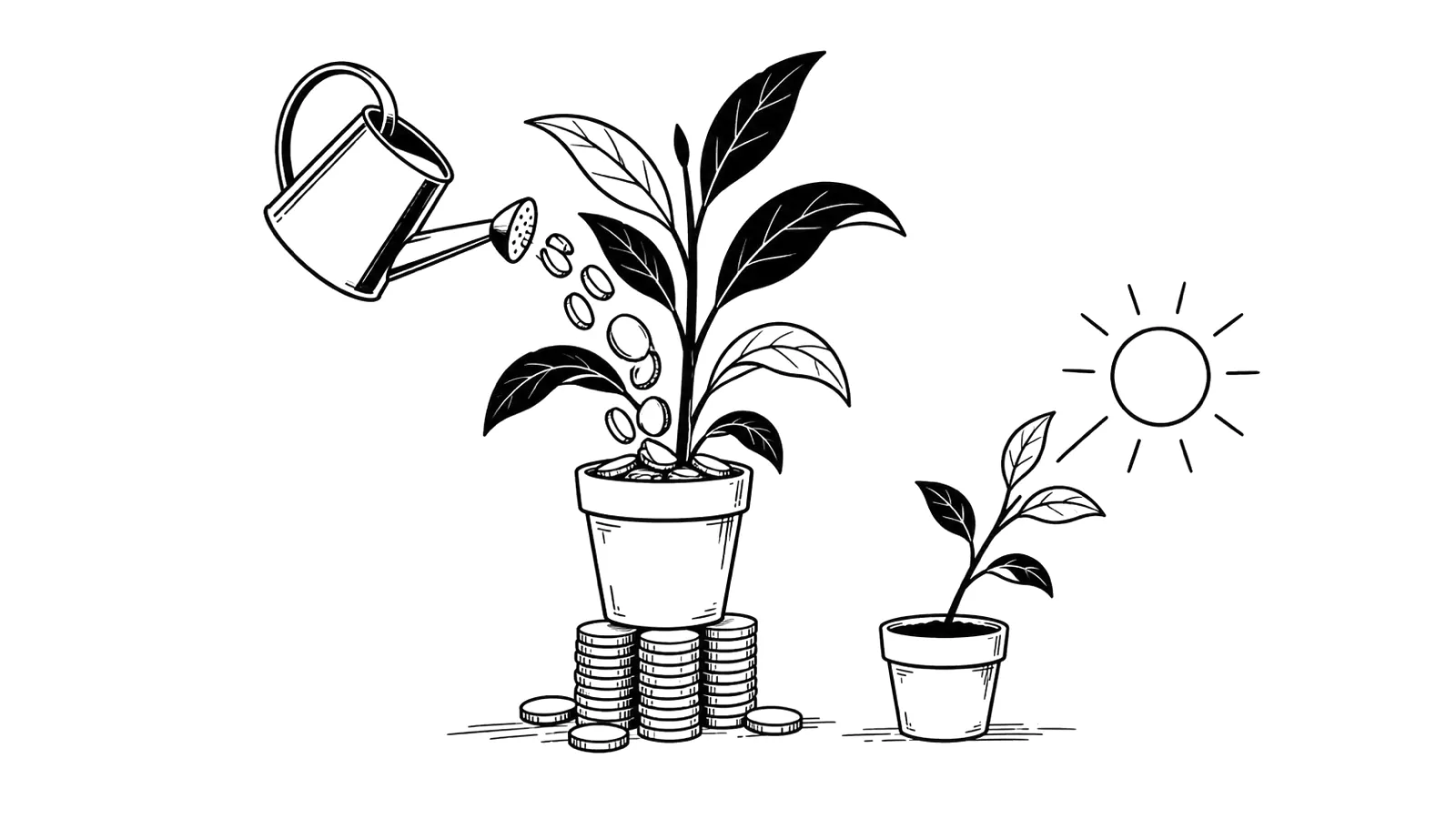
The Top Grossing chart ranks apps by how much money they make, and every rank on it is real evidence. But it says nothing about why people paid. Two apps at the same rank can have completely different businesses behind them:
- One gets most of its users from App Store search and word of mouth. People wanted the app and went looking for it.
- The other spends heavily on Instagram and TikTok ads, runs every install through a hard paywall with a free trial, and earns back the ad cost (hopefully) over the following months.
Both are legitimate. But only the first tells a solo developer "you could do this too". If you copy the second without its ad budget, you get the app without the users.
Check 1: revenue against ratings
Most people who use an app for weeks never rate it, but a steady fraction do, especially when the app asks at the right time. So the number of ratings grows roughly with the number of engaged users. An app that makes a lot of money while almost nobody rates it is unusual. The common explanations are a very short user lifetime (people subscribe from an ad, cancel and leave) or very new paid traffic.
How to check: look up the app's rating count on its product page and its chart rank on the Top Grossing chart. Fledly estimates monthly revenue from the rank and flags an app as likely paid traffic when the estimate is above $150,000 a month with fewer than 150 ratings in the US store. On October 26, 2026, 15 of the 357 young non-game apps on the US Top Grossing charts got that flag.
The flag is deliberately strict, so it misses a lot. An app with 2,000 ratings can still get most of its installs from ads. Treat it as a first filter, not a verdict.
Check 2: ratings velocity
The total rating count tells you about the past. The new ratings per month tell you about now. For the young apps on the US charts in October 2026, the median gained about 72 ratings a month and the top quarter more than 366.
If an app climbs the chart for weeks while its rating count barely moves, the new revenue isn't coming from many new, happy users. Note the rating count today and again in two weeks; that is the cheapest research you can do.
Check 3: the public ad libraries
Three of the biggest ad platforms publish the ads they run, and anyone can search them without an account:
| Library | What it covers | What to look for |
|---|---|---|
| Meta Ad Library | Ads on Meta's platforms, Facebook and Instagram included, searchable by advertiser in any country | Number of active ads and how recently they started running. Dozens of fresh variants means active testing at scale. |
| TikTok Commercial Content Library | Ads shown in Europe (EU) | Whether the app advertises at all, and how many creatives it tests |
| Google Ads Transparency Center | Search, YouTube, Display and Gmail ads, searchable by advertiser | YouTube and search ads for the app's name or its category |
Search for the app's name and its developer name. A handful of ads is normal. Dozens of active creatives, many started in the last few days, is a team buying installs every day.
The libraries don't show spend for regular commercial ads, so they can't tell you how much an app spends. They do tell you whether paid acquisition is part of the business.
Check 4: does it rank in App Store search?
If people find an app through the App Store, it ranks for the searches that describe it. Search for the three or four obvious phrases for the app's concept, for example meal planner, grocery list and recipe planner for a meal planning app.
- If the app is in the top 10 for its concept's main searches, a good share of its installs probably come from search.
- If you can't find it in the top 50 for any of them, yet it ranks high on Top Grossing, its users are arriving from somewhere else. Usually that's ads or a creator's audience.
Also look at the first result of each search. Apple marks paid results with an Ad label. An app that pays for its own name or its main keywords in Apple Ads is buying search traffic too, though bidding on your own brand is common and not a strong signal on its own.
Fledly tracks daily App Store search ranks for the apps and keywords you follow, which turns this check into a chart instead of a manual search.
Check 5: the shape of the paywall
Install the app and go through onboarding. Paid-traffic apps tend to share a funnel shape, because every install costs money and has to convert quickly:
- A long onboarding quiz that ends in a hard paywall before the app can be used.
- A weekly subscription as the default option, often with a free trial.
- Few or no free features.
None of this is wrong, and plenty of organic apps use hard paywalls. But when you see a hard weekly paywall and a big ad library and few ratings, the business is ads in, subscriptions out.
What to do with the answer
| What you found | What it means for you |
|---|---|
| Earns, gains ratings, ranks in search | Real pull. The best evidence a concept is open to newcomers. |
| Earns, few ratings, many ads | Paid growth. You'd need a comparable ad budget and a strong conversion funnel. |
| Earns, many ratings, weak search ranks | Users come from somewhere else, such as social media, a creator or press. Find out where before you copy. |
| Many ratings, low revenue | Loved but under-monetized. A better business model can win here. |
One paid-traffic app in a concept isn't a reason to skip it. If two or three unrelated developers earn with the same concept and at least one of them shows real pull, the demand is real, and the paid apps are just one way to reach it. That's why Fledly's idea score multiplies a concept down (×0.8) only when most of its revenue comes from likely paid-traffic apps. The full method is in how to validate an iOS app idea with App Store data.
Frequently asked questions
How can I tell if an app uses paid advertising?
Search for the app or its developer in the Meta Ad Library, the TikTok Commercial Content Library (ads shown in Europe) and the Google Ads Transparency Center. Many active ads with recent start dates mean paid acquisition is a major part of its growth. Also compare its Top Grossing rank with its rating count and its App Store search ranks.
Can you see how much an app spends on ads?
Not from public sources. The ad libraries show which ads run and when they started, but not the spend for regular commercial ads. Paid market intelligence tools estimate ad spend, but those estimates are rough.
What does it mean when an app earns a lot but has few ratings?
Usually that its users stay a short time or arrived recently through paid ads. Revenue comes from many short subscriptions rather than a base of engaged users who stay long enough to rate the app. It can also mean the app never asks for ratings, so check the other signals too.
Should I copy an app that grows with paid ads?
Only if you can afford to compete on ad spend and conversion. Without a budget, look for concepts where several apps earn and at least one gains users through search and word of mouth.
Sources
- Fledly data: US Top Grossing charts (overall and by category) and US App Store ratings, October 26, 2026.
- Meta Ad Library, TikTok Commercial Content Library, Google Ads Transparency Center and Google's Ads transparency help page.
Keep reading
 Research · October 27, 202622 iPhone app ideas already proven by young apps that earn (October 2026)Not brainstormed: every idea on this list has young iPhone apps on the Top Grossing charts right now, most from several unrelated developers. Scores, evidence and the opening a solo developer could take.
 Research · October 27, 202610 kinds of apps that earn well but a solo developer can't copyYoung apps in these ten groups are on the Top Grossing charts right now, and they look like easy targets. The money comes from content rights, network effects, licences or hardware, not from the app. Here is how to spot them.
 Research · October 27, 2026357 young iPhone apps already earn on the US Top Grossing charts. Here's what they have in commonWe looked at every non-game app on Apple's US Top Grossing charts on October 26, 2026. One in five launched in the last two years. Their age, size, categories, pricing and the app concepts that repeat.