Four of the top 10 grossing Food & Drink apps are meal planners under five months old
A year ago, budget meal planning was a recipe-site feature. On October 27, 2026, four apps that do only that, all under five months old, ranked between #3 and #10 on Apple's US Food & Drink Top Grossing chart. Here's what they do, what they charge, and where their users are unhappy.
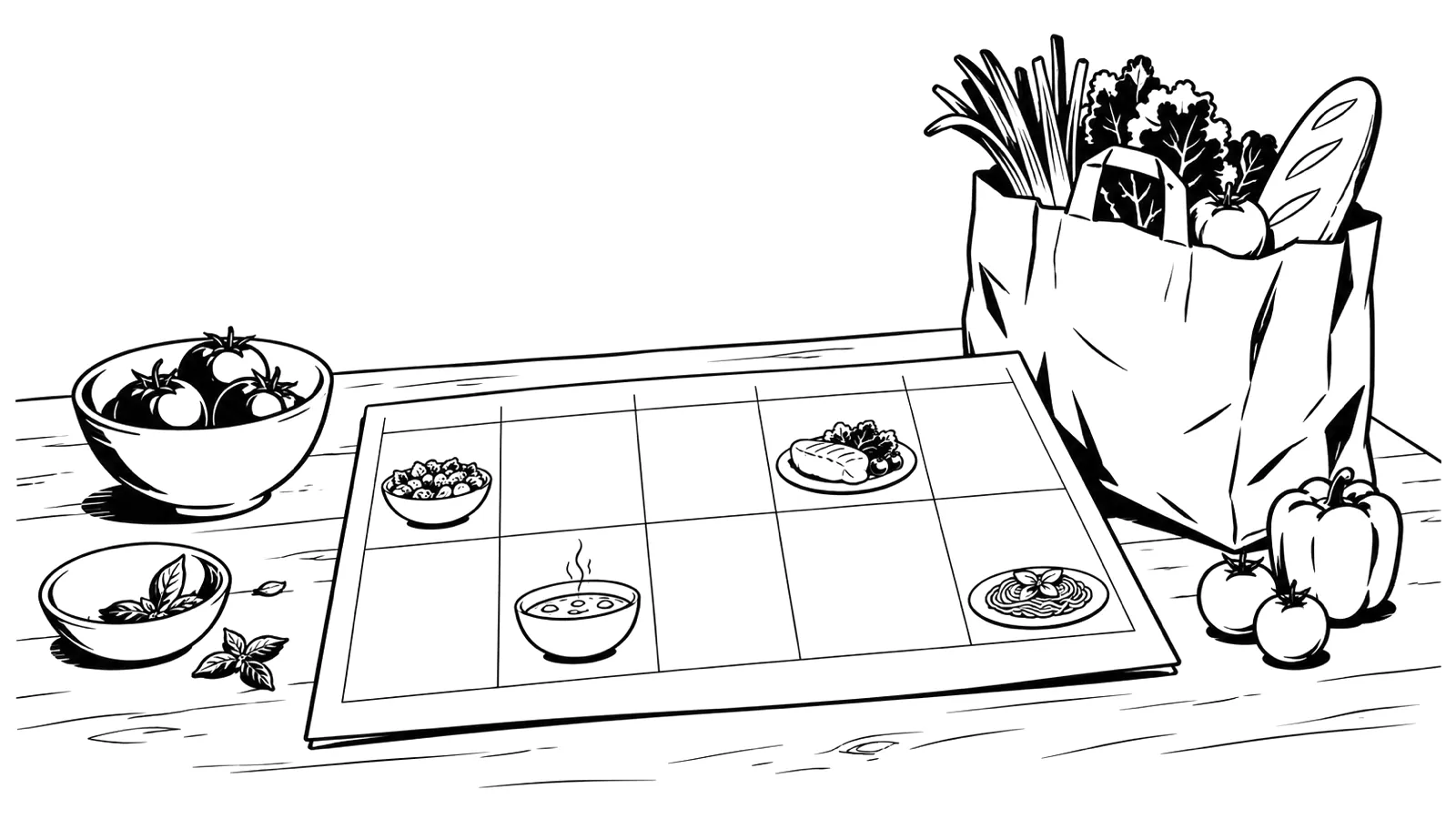
When we looked at young apps on the US Top Grossing charts for our October study, one idea kept appearing from different developers: an app that plans a week of cheap dinners around your budget and your store, and gives you a priced grocery list. This post looks at that one idea in detail, with the chart snapshot of October 27, 2026.
The chart: four newcomers in a top 10 of cooking institutions
Apple's US Food & Drink Top Grossing chart ranks the category's apps by what they earn through the App Store. On October 27 the top 10 was mostly recipe and cooking subscriptions:
| Rank | App | Age | Ratings |
|---|---|---|---|
| 1 | ReciMe: Recipes & Meal Planner | 5 years | 321,541 |
| 2 | NYT Cooking | 12 years | 549,014 |
| 3 | TapCook: Budget Meal Plans | 3.4 months | 5,248 |
| 4 | NeatEat - Meal Planner | 3.4 months | 1,356 |
| 5 | Localize - Farmers Market | 10 months | 20,070 |
| 6 | mise - meal planner | 4.6 months | 3,806 |
| 7 | Osta: Save & Share Recipes | 1.5 years | 6,799 |
| 8 | America's Test Kitchen | 8 years | 18,349 |
| 9 | Vivino | 16 years | 139,845 |
| 10 | Potto - meal planner | 4.5 months | 2,325 |
Four of the ten are budget meal planners from four different developers, and none of them is older than five months. They are not a one-day blip either: all four were in the top 15 on every day we recorded between October 20 and 27, and TapCook was #3 on each of those days.
A fifth, Whipp, was #6 on October 20 and had slipped to #18 by October 27. Further down the same chart are newer entrants: Vego (vegan meal planner, 1.5 months old, #58), Chow (1.5 months, #63) and Bunlo (under a month, #64).
How much they earn
We don't put a dollar figure on these apps. Our revenue model converts a category rank to an estimate using apps that appear on both the category chart and the overall top 100, and on October 27 no Food & Drink app was in the overall top 100. Any number we gave would be a guess. What the ranks do say: through the App Store, these apps rank above America's Test Kitchen and Vivino, and just behind NYT Cooking.
Same idea, four developers
On the same day, counting apps under 12 months old on the UK, Canadian, Australian and German charts as well, we found 24 young meal-planner apps from 24 different developers earning enough to chart. That is what makes this a pattern rather than a lucky app. In Fledly's scoring it gets a Build verdict with a score of 84 out of 100, held back mainly because the category's revenue estimate is uncertain and because the field is now crowded.
| App | Developer | Age | Ratings | New ratings / month |
|---|---|---|---|---|
| TapCook | TestMaxx | 3.4 mo | 5,248 | ~1,570 |
| mise | TEGS LABS | 4.6 mo | 3,806 | ~830 |
| Potto | Individual developer | 4.5 mo | 2,325 | ~520 |
| NeatEat | Streamline Merch | 3.4 mo | 1,356 | ~400 |
| Whipp | EVOY | 4.5 mo | 461 | ~100 |
| Vego | Individual developer | 1.5 mo | 107 | ~70 |
Note the developer column: two of these apps are published by individual developers, not companies. The products are similar enough that what decides the ranking is distribution and execution, not a technical moat.
What they charge
From the in-app purchase lists on their App Store pages:
| App | Monthly | Yearly | Weekly |
|---|---|---|---|
| TapCook | $9.99 | $29.99 | n/a |
| NeatEat | $12.99 | $29.99–39.99 | $7.99 |
| mise | $9.99 | $19.99–59.99 | (reviews mention $9.99) |
| Whipp | $9.99 | $29.99–49.99 | n/a |
| Potto | n/a | n/a | $9.99 (per its reviews) |
Several prices per period usually mean introductory offers or price tests. The pattern is clear anyway: a hard paywall right after an onboarding quiz, a short free trial, then $10 a month or $30–60 a year. Potto charges $9.99 a week, about $43 a month, and its reviews show what users think of that.
What 143 unhappy users say
We read every one- and two-star review we had stored for the five leading US apps: 143 reviews written between late July and October 22, 2026. We then counted how many mention each theme by keyword. The counts are approximate, because one review can mention several things.
| Theme | Share of 1–2★ reviews |
|---|---|
| Price feels too high | ~31% |
| Free trial and billing problems (charged early, charged after cancelling) | ~28% |
| Paywall before the app shows anything useful | ~23% |
| AI-generated recipes or photos ("AI slop") | ~20% |
| Weekly pricing | ~18% |
| Bugs, setup loops, crashes | ~11% |
| Grocery prices or budget don't match the store | ~8% |
| Diet restrictions ignored (gluten, dairy, exclusions) | ~8% |
| The same meals over and over | ~8% |
Three things stand out.
The paywall comes too late in the flow and too early in the value. Most of these apps ask five minutes of questions (household size, budget, store, diet) and then show a paywall before a single meal. Reviewers don't object to paying. They object to finding out after the quiz, and to being charged during a "free" trial they thought was risk-free.
The core promise is accuracy, and AI makes it look fake. A budget meal planner is only useful if the grocery list really costs what it says. Several reviewers shopped the list and paid far more, or noticed that the app priced one tablespoon of an ingredient instead of the whole jar they had to buy. AI-generated food photos that don't match the recipe make the problem visible at a glance.
Weekly pricing collides with the audience. People looking for a budget meal planner are, by definition, watching every dollar. "$10 a week" appears again and again in Potto's reviews.
Where these users come from
The App Store search "meal planner" has an Apple Ads popularity score of 53 (US, week of October 18), unchanged over the past month. That's a solid mid-range search, but not big enough on its own to put four new apps into a top 10. More specific searches like "budget meal planner" and "cheap meals" fall below Apple's cut-off, which means fewer searches than any term Apple lists, not that nobody searches them. "AI meal planner" is the first autocomplete suggestion after typing "ai mea".
The reviews point to another channel. Users mention seeing the app in a TikTok video or an Instagram ad, and one Potto reviewer complained that it was promoted as "helpful when you have almost no budget". These apps grow on short videos that show the result (a week of dinners for $50) and use App Store search to catch the people who come looking afterwards.
The version a solo developer could build
The concept is proven and the window is still open: the newest earner on the US chart was under a month old on October 27. The field is crowded, so a copy won't win. A better answer to the complaints above might:
- Show the price before the quiz, and give a real free result: one complete, usable week for one store, with no trial required.
- Make prices honest. Price the package you have to buy and reuse the rest of it later in the week. "Leftovers reuse" is both a feature and a marketing line.
- Use real food photos or none. In this category, users see AI images as a sign of low quality.
- Handle diets properly: allergies, dairy-free, gluten-free and exclusions that are never ignored.
- Price monthly and yearly, not weekly, and send the trial reminder you promise.
The smallest version worth testing: one store chain, seven dinners for a set budget, one priced shopping list, no account. If that version gets people to share their weekly plan, the distribution problem starts to solve itself.
Method
- Charts: Apple's US Top Grossing chart for Food & Drink (top 100), snapshot of October 27, 2026; chart history recorded daily since October 20, 2026.
- Young apps: released in the last 24 months (US) or 12 months (UK, Canada, Australia, Germany, Finland), big-tech publishers excluded. An AI model assigns each app to a concept from its store listing, so single apps can be misfiled. How the score works: How to validate an iOS app idea.
- Prices: in-app purchase lists on each app's US App Store page, fetched in October 2026; the Potto and mise weekly prices come from their reviews.
- Reviews: one- and two-star US App Store reviews stored by Fledly for TapCook, NeatEat, mise, Potto and Whipp (143 reviews, July 28 to October 22, 2026), counted by keyword. Shares are approximate.
- Search popularity: Apple Ads search term popularity, US, week of October 18, 2026. What the score means.
Frequently asked questions
Are budget meal planner apps profitable?
Four of them were in the US Food & Drink Top Grossing top 10 on October 27, 2026, three to five months after launch, so they earn more through the App Store than most apps in the category. We don't publish a dollar estimate, because category ranks in Food & Drink can't be converted to revenue reliably.
How much do meal planner apps charge?
The leading young apps charge $9.99–12.99 a month or $20–60 a year after a short free trial. Some sell weekly plans at $7.99–9.99, which reviewers consider too expensive for a budget app.
What do users complain about in meal planner apps?
In 143 one- and two-star reviews of the five leading young US apps, the most common complaints were price, trial billing, a paywall before any useful result, AI-generated recipes and photos, and grocery prices that didn't match the real store total.
Is it too late to build a meal planner app?
The newest charting app was under a month old on October 27, 2026, so new apps are still getting in. With 24 young apps from 24 developers, a straight copy is unlikely to stand out. An app that fixes the common complaints, especially honest pricing and accurate grocery totals, has a clearer angle.
Keep reading
 Idea teardown · October 27, 2026AI photo-to-video apps: nine young earners, $10–15 a week, and the complaint they all shareNine AI photo-to-video apps under two years old were on Apple's US Photo & Video Top Grossing chart on October 27, 2026. What they earn (roughly), how they price, what 152 one- and two-star reviews say, and what a solo developer would have to do differently.
 Research · October 27, 2026357 young iPhone apps already earn on the US Top Grossing charts. Here's what they have in commonWe looked at every non-game app on Apple's US Top Grossing charts on October 26, 2026. One in five launched in the last two years. Their age, size, categories, pricing and the app concepts that repeat.
 Research · October 27, 202622 iPhone app ideas already proven by young apps that earn (October 2026)Not brainstormed: every idea on this list has young iPhone apps on the Top Grossing charts right now, most from several unrelated developers. Scores, evidence and the opening a solo developer could take.